
Riga Develops Guidelines for Integrating Urban Air Mobility into the City Mobility System
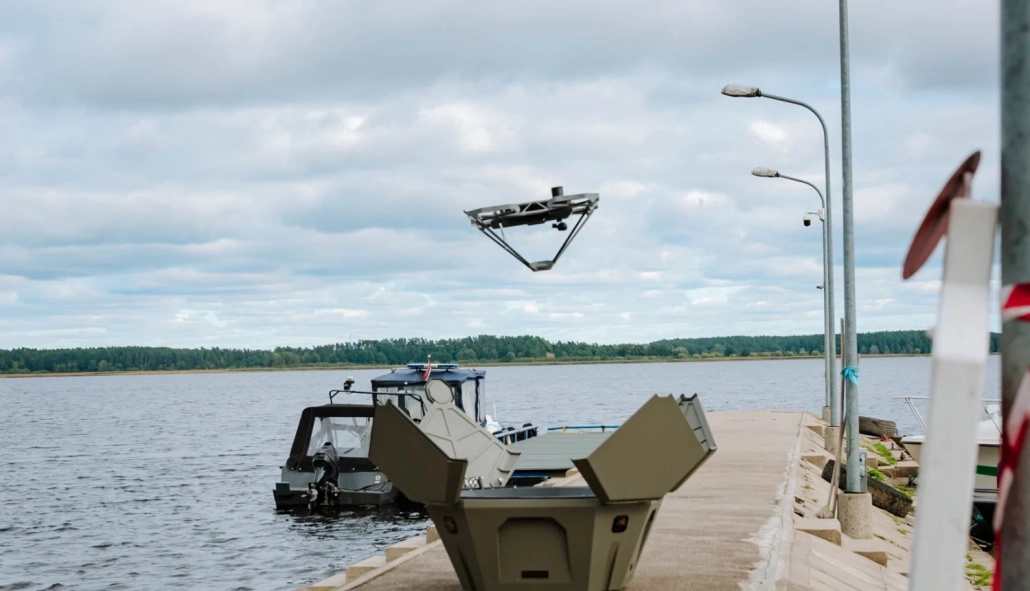
The Municipality of Riga has developed the “Riga Guidelines for Integrating Urban Air Mobility into the City Mobility System.” The document is available here in Latvian language: Vadlinijas_gaisa_telpa.
Unmanned aerial vehicles (UAVs), commonly referred to as drones, are becoming an increasingly relevant component of modern urban ecosystems. They are already used in public safety monitoring, emergency response, infrastructure inspection, construction, and medical logistics. To ensure that these services evolve in a coordinated and safe manner, Riga required a clear governance framework defining where drones can operate, how risks are mitigated, and how different operators are coordinated within the urban airspace.
The guidelines were developed by the Rīgas valstspilsētas pašvaldības Pilsētas attīstības departaments following the completion of the international CITYAM projekts (Preparing Cities for Sustainable Urban Air Mobility) project. Within CITYAM, Riga collaborated with Stockholm, Helsinki, Hamburg, Tartu and Gdańsk to jointly design practical approaches for the safe integration of drone technologies in European cities.
Riga is among the first cities in the Baltic Sea Region to establish a strategic framework for urban air mobility development. The guidelines define recommended flight corridors, including routes over water bodies, parks and rooftops, and address beyond visual line of sight (BVLOS) operations, enabling automated drone flights over several kilometres. Such operations are particularly relevant in time-critical domains such as medical logistics and public safety, where speed and precision are essential.
The document also outlines Riga’s long-term vision to establish a Drone Management Centre. This would enable the city to monitor drone traffic, coordinate operators, ensure safety and public awareness, and prepare for the implementation of U-space — the European Union’s harmonised digital framework designed to enable safe, efficient and integrated drone access to airspace. The guidelines foresee pilot flights in the areas of public safety, emergency management, critical infrastructure monitoring and medical logistics to validate technologies in real urban conditions.
In cooperation with Rīgas Tehniskā universitāte, a digital GIS-based planning tool has been developed to identify suitable drone take-off and landing locations. The tool evaluates territorial context, infrastructure availability and safety parameters, providing municipal planners and services with an evidence-based decision-support instrument for future projects.
In parallel, flight zones for the Riga Municipal Police have been coordinated with the Civilās aviācijas aģentūra in the areas of Lake Ķīšezers and Vecāķi beach to enhance safety monitoring. Discussions and preparatory work are also ongoing for a potential pilot flight between Rīgas 2. slimnīca and a laboratory to test drone-based blood sample delivery. If validated, such a solution could improve operational efficiency and reduce costs in healthcare logistics.
The outcomes of the CITYAM project demonstrate that Riga is ready to gradually develop urban air mobility, grounded in innovation, cross-sectoral cooperation and citizen engagement. The guidelines and analytical tools developed through the project will serve as a foundation for future policy decisions and smart city development processes.
A public survey conducted during the project indicates strong societal support for drone integration: more than 63% of respondents expressed positive attitudes towards drone use in the city — one of the highest support levels among partner cities. The strongest support relates to accident prevention, public safety enhancement, infrastructure monitoring and medical deliveries, confirming that residents recognise both the practical and social value of urban air mobility.
More information about the CITYAM project:
CITYAM: Preparing Cities for Sustainable Urban Air Mobility – Smart Riga
CITYAM – Interreg Baltic Sea Region