Secondary school students in Riga use sensors to study air quality


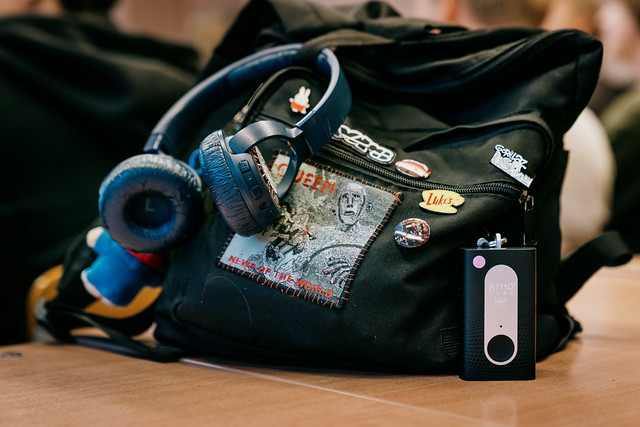
As part of the “Breathe, Riga!” initiative, young people used sensor technologies to collect air quality data in different parts of the city, while also participating in a study on mobility habits.
From September 2025 to March 2026, the project applied a citizen science approach, involving 117 secondary school students in data collection and urban environment research. Using portable air quality sensors, more than 696 thousand outdoor measurements were collected, analysing PM2.5 and PM10 particulate matter concentrations across different locations in Riga.
The collected data shows that air pollution levels increase during peak traffic hours – in the mornings and afternoons, when residents travel to work, school or back home. The study confirms that transport is one of the key factors affecting air quality in the city.
Young people from several Riga schools participated in the project, actively engaging in data collection, urban environment observation and the analysis of mobility habits. The initiative demonstrates how sensors, data and public engagement can help develop smarter and data-driven urban management solutions.
Such pilot projects are an important part of smart city development, where technologies and citizen participation help better understand urban processes, support data-driven decision-making and contribute to a more sustainable, healthier and resident-friendly urban environment.
The “Breathe, Riga!” pilot project is implemented within the “PilotCities” programme of “NetZero Cities” by Riga Energy Agency and NGO Green Liberty in cooperation with University of Latvia. The aim of the project is to reduce CO₂ emissions and improve air quality in Riga by involving teachers, students and other groups of society. The project is funded by the European Union.
Summary report:
Elpo-Riga-_Parskats_isais-30.04.2026.-ENG.pdf